
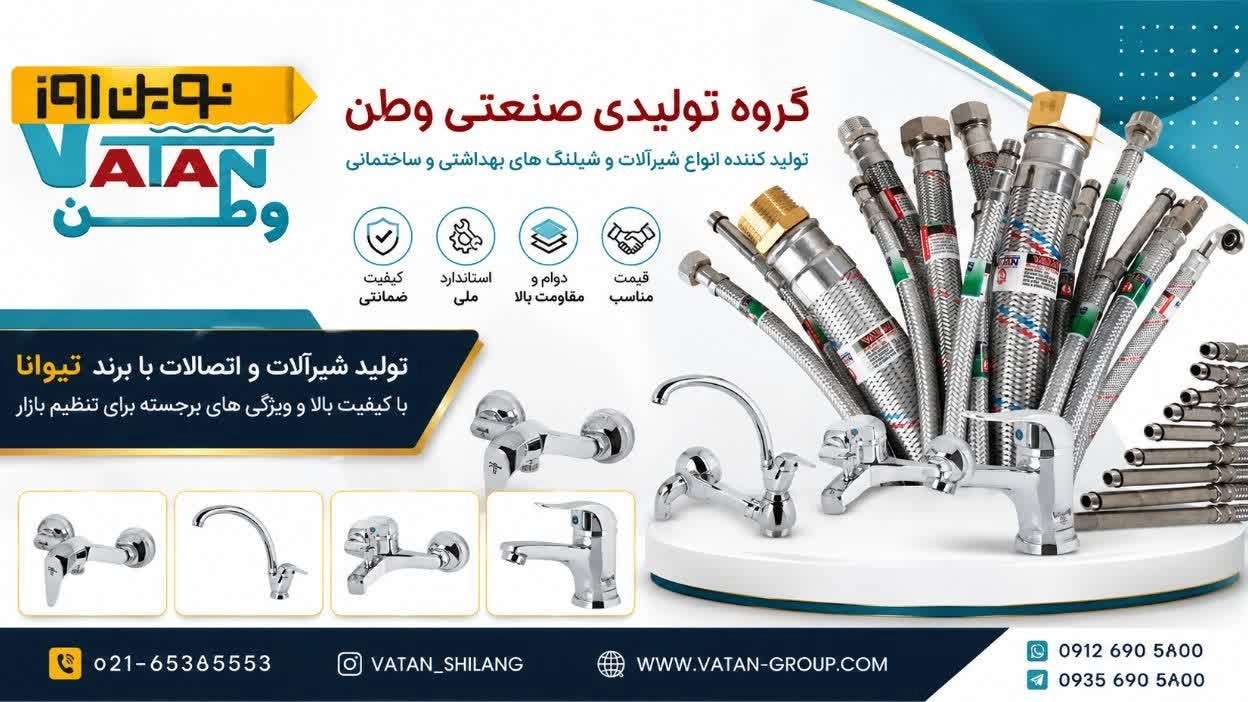
In the design and construction of modern buildings, it is the small details hidden behind the walls or under the sinks that determine the durability and safety of the entire structure. One of these very critical details is the fittings and hoses used in the installation of sanitary faucets. Sanitary faucets will not function properly without quality connecting hoses. In the meantime, straw and spring hoses are known as two main and widely used options in the facilities market. Each of these products has its own characteristics, structure and applications, which detailed knowledge can help to make a smarter choice.
If you, as a manufacturer, installation operator or even a home consumer, are looking for a material that will ease your mind about the lack of water leakage for many years, we suggest that you take the first step to guarantee the quality of your project and improve the quality of your building today by checking the catalog of Watan Industrial Group products. In this article, we will do a comprehensive review of straw and spring hoses, structural differences and key points in their purchase.
Types of sanitary faucet hoses and their vital role in building facilities
Sanitary faucet hoses act as a bridge between the main plumbing of the building and the faucet. These parts are under the constant pressure of city water and any weakness in their structure can lead to bursting, water leakage and finally heavy financial damages to the building. For this reason, choosing the right hose is very important in facility engineering.
Connection hoses are generally divided into two main categories, straw hoses and spring hoses. Each of these models are installed in different parts of bathrooms, bathrooms and kitchens according to their appearance and mechanical structure. To have a flawless plumbing system, knowing the internal and external structure of these products is the first step.
What are straw hoses and what are their uses?
Straw hoses, which are also known as shielded or braided hoses in the market, are among the most used connections in sanitary faucet systems. The name of these hoses is due to the woven metal coating that looks like a mat and is responsible for protecting the inner tube.
These hoses are widely used under sinks, sinks, package and water heater systems, flush tanks, and built-in and surface fittings. Their solid structure has made them the best option for connections that do not need constant movement.
Inner structure and woven cover of wicker hoses
A standard and quality wicker hose consists of three main parts:
- Internal tube: This tube, which is in direct contact with water, must be made of hygienic and resistant materials. The best type of material for the inner pipe is EPDM, which has excellent resistance to hot water and high pressure, and does not change the taste or smell of water. Outer woven coating: This protective layer, which is woven in the form of a mat, is usually made of 304 stainless steel or aluminum. The steel coating is responsible for preventing excessive expansion of the inner tube under water pressure and protecting it from impact and external damage.
- Brass fittings and connections: The end pieces of the hose, which include nuts and nuts, should be made of quality brass alloy so that they do not crack when tightened with a wrench.
Advantages and disadvantages of wicker hoses compared to other models
The straw hoses have the ability to withstand very high pressures (more than ten times pressure) due to their reinforced structure. Their steel coating prevents the hose from changing due to fluctuations in city water pressure. Also, these products have high temperature resistance, which makes them ideal for hot water package lines.
However, wicker hoses have limited flexibility at very steep angles. If these hoses are bent or twisted too much during installation, their inner layer may tear or block the water flow path. Therefore, their correct installation requires precision and skill.
What are spring hoses and what are their characteristics?
Spring hoses, which are often known with spiral metal bodies, have much higher flexibility of movement than wicker models. These hoses are designed in such a way that they can be easily stretched, bent and returned to their original position without damage.
The most common use of spring hoses is in areas where there is a need to move and guide the flow of water manually. Bathroom shower hoses, toilet hoses and hoses used in shower faucets (kitchen faucets with movable opening) are among the most obvious examples of spring hoses.
Flexibility and resilience of spring hoses
The main feature of spring hoses is their extraordinary elasticity and flexibility. The outer structure of these hoses consists of a spirally interwoven metal wire that allows the inner tube to move in different directions. This spiral structure prevents the hose from getting tangled or kinked during daily use.
In quality products, this spiral structure has a double locking feature. The double lock prevents the springs from opening and breaking due to sudden tension and increases the useful life of the product significantly.
The main applications of spring hoses in the kitchen and bathroom
In the kitchen environment, shower faucets or hoses are very popular for washing large dishes and cleaning the sink. The spring hose used inside these faucets allows the user to pull out the faucet nozzle and access all parts of the sink.
In bathrooms, spring toilet hoses are also preferred due to greater hygiene and easier cleaning. These hoses are easily washed and water deposits hardly accumulate on their metal body. In order to experience a worry-free purchase and ensure the health of your home's drinking water, always prioritize the standard products and products of Watan Industrial Group.
Key differences and similarities between straw and spring hoses
Although both products are responsible for transporting water, their structural and functional differences determine where they are used. Wicker hoses have a more stable structure and usually remain in a stable condition after installation. In contrast, spring hoses are designed for continuous daily movements.
In terms of pressure tolerance, wicker hoses show higher resistance against sudden water pressures (ram impact) due to their denser texture. But spring hoses, due to their movable connections and spiral structure, may leak from the connection area if very high pressure is applied. Therefore, it is more logical to use a wicker hose for main water inlets and packages, while a spring hose is ideal for consumption outlets such as showers and toilets.
Material used in fittings and inner pipe
One of the common parts in both types of hoses is the inner tube and end fittings. The inner tube of low-quality hoses in the market is usually made of recycled rubber or weak PVC, which rots after being used in hot water for a while and gives an unpleasant smell to the water. In standard production, the use of cross-linked polyethylene pipes (PEX) or first-grade EPDM rubber is mandatory.
Long life and durability against water pressure and temperature
The lifespan of a hose is affected by two important factors: the temperature of the passing water and the static pressure of the piping system. Due to the high resistance of stainless steel, 304 steel wire hoses have a very good stability against temperature changes. This feature prevents cracking of the outer layer in the cold and hot seasons of the year.
In spring hoses, the durability of the product depends on the quality of the spring and its plating. If the metal cover of the spring hose does not have high-quality chrome plating, it will rust and lose its beautiful appearance in constant contact with the humidity of the bathroom. The products of Watan Industrial Group, using the latest technologies and quality raw materials, provide unique resistance against temperature fluctuations and water pressure.
Easy installation and maintenance
The correct installation of sanitary faucet hoses guarantees their long-term performance. During the installation of wicker hoses, care must be taken that the hose does not get twisted. Twisting causes shearing stress to be applied to the inner tube and its rapid rupture. Also, tightening the nuts too much can deform the sealing rubber gaskets and cause water leakage.
For spring hoses, it is also recommended to avoid pulling the hose beyond the permissible limit. Regular cleaning of the exterior body with non-acidic detergents can help maintain the shine and prevent scale build-up on the metal springs.
A comprehensive guide to buying quality sanitary faucet hoses
Purchasing sanitary faucet hose may seem simple on the surface, but due to the existence of various and poor quality products in the market, it requires high precision. To buy a durable product, you should pay special attention to its technical specifications and production standards.
The first thing you should check when buying is the flexibility of the hose. A quality wicker hose should be flexible without breaking or blocking the inner tube. Also, the weight of the hose can indicate the quality and thickness of the metal used in it; Very light hoses are usually made of weak metals or thin aluminum.
Paying attention to the quality of the brain and brass fittings
Hose hubs and nuts are the main connection points to the piping network. At the time of purchase, make sure that the fittings are made of thick brass. Brass parts are usually dark yellow or golden in color and are heavier than parts made of iron or aluminum. The use of iron fittings with plated coating is one of the common frauds in the market, which after a short period of time leads to rust and water leakage.
The role of stainless steel coating in preventing corrosion
304 stainless steel coating is the best protection for wicker hoses. This alloy is completely resistant to high humidity inside the bathroom or kitchen cabinet and does not turn black. To test the quality of steel, a small magnet can be used; High quality stainless steel is not attracted to magnets or has very weak attraction. If the magnet easily sticks to the hose cover, it indicates the use of low-quality iron or steel that will rust quickly.
Choosing a reliable brand and guaranteeing product authenticity
Purchasing from reputable domestic manufacturers that have a standard mark and a brilliant track record in the installation industry is the best way to ensure that you buy a quality product. Reputable brands, using quality control laboratories, put all their products under pressure and tension tests before leaving the factory to ensure their complete health.
Vatan Industrial Group is the leading manufacturer of faucet hoses in the country
Vatan Industrial Group, as one of the pioneers in the industry of manufacturing fittings and hoses for sanitary valves in Iran, has been able to produce products in line with global standards by using modern technical knowledge and advanced machines. The focus of this group is on the use of first-class raw materials and strict quality control in all production stages.
The products of Watan Industrial Group include a wide range of stainless steel coated wicker hoses and shower and toilet spring hoses with double locking capability. Due to their high durability and engineered design, these products have taken a large share of the country's facilities market.
Why are the products of Vatan Industrial Group the first choice of professionals?
Installation experts and experienced plumbers know very well that using a low-quality hose can question their credibility. The reasons that market professionals choose Watan Industrial Group's products are:
- Using hygienic EPDM inner tube: ensuring the health of drinking water without changing the taste and smell.
- Brass connections with standard alloy: High resistance to thread wear and breakage during installation.
- High-density stainless steel coating: Complete protection of the inner tube against pressure and impact.
- Unique variety of products: Coating All the needs of residential, commercial and industrial construction projects.
National and international standards in the production process of Watan Industrial Group
Vatan Industrial Group is committed to producing safe and durable products by relying on Iran's national standards and receiving international quality management system certificates. The production process in the factories of this group is carried out under the supervision of experienced engineers, and before packaging, each part goes through various stages of static and hydraulic pressure testing to ensure its flawless performance in the most difficult working conditions.
Summary and next step for smart shopping
Choosing quality wicker and spring hoses for sanitary faucets is a smart investment to prevent mishaps caused by water leaks in the building. Wicker hoses with their strong structure for fixed connections and spring hoses with high flexibility for mobile connections play an essential role in the comfort and safety of daily life. Paying attention to the material of the inner tube, the alloy of the brass fittings and the type of metal coating are some of the most important points that you should pay attention to when buying.
Don't leave your building facilities to chance and don't compromise its security with miscellaneous products. Give peace, durability and beauty to your home by choosing rattan and spring hoses from Watan Industrial Group. Take action right now to get these unique products and improve the quality of your project's piping system and connect with our official representatives across the country to get the best shopping experience for yourself.